


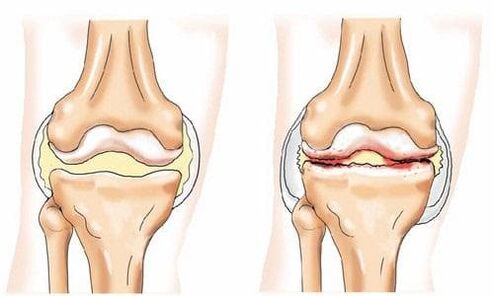
Gonarthrosis of the knee joint is a disease of a degenerative-dystrophic nature.With this disease, cartilage tissue is destroyed and the joint is deformed.
Typically, knee osteoarthritis affects people over 40 years old.This disease occurs twice as often in women as in men.
The knee joint is one of the largest joints in the human body.It is characterized by a high degree of mobility, since it is responsible not only for the mobility of the leg, but also helps to support the weight of the person.It serves as a connecting “bridge” between the femur, tibia and fibula.The knee joint is supported by various ligaments and tendons.
Diagnosis and symptoms
With gonarthrosis, blood circulation in small bone vessels is disrupted, and then the cartilaginous covering of the joint and surrounding tissues begins to collapse.Due to age-related factors or other reasons, the density and elasticity of the cartilage decreases and becomes covered with cracks and depressions.
As a diagnostic measure, the patient should consult a specialist for a thorough medical examination and x-ray examination.Naturally, everyone should know the symptoms of the development of osteoarthritis of the knee joint:
- when moving, the patient feels pain in the knee;
- swelling is observed in the damaged area;
- movements of the injured knee become limited;
- there is a feeling of instability in the painful knee;
- rigidity;
- The final result of the disease can be considered joint deformity: the most common is O-shaped or valgus, that is, X-shaped.
You should know that the severity of certain symptoms does not indicate the degree of progression of the disease.However, with the development of gonarthrosis, the severity of symptoms also steadily increases.
The symptoms of knee osteoarthritis have been known to specialists for a long time;they were described almost a hundred years ago.Popularly, this disease is characterized by salt deposits, and this statement is not a myth.Osteoarthritis is accompanied by the deposition of salts in the tissues of the knee, particularly the ligaments and tendons.
Stages of knee osteoarthritis
Experts distinguish several degrees of development of gonarthrosis, which indicate the severity of the patient's condition.So, there are three degrees of osteoarthritis of the knee joint:
The symptoms of first degree knee osteoarthritis are reduced to periodic pain, usually after exercise, as well as minor deformation of the joint.It is not uncommon to see a tumor in the affected area.
As for the second degree of osteoarthritis, at this stage we observe an increase in primary symptoms.The intensity and duration of knee pain increases, crunching and difficulty bending appear.The joint increases in volume and its deformation is already becoming pronounced.
Osteoarthritis of the knee joint of the third degree is characterized by pain that occurs not only during movement, but also at rest.There is limited mobility and severe gait disturbance.The joint deforms and takes the shape of an O or an X.
Treatment
Before you start fighting gonarthrosis of the knee joint, you definitely need to find a good specialist, ask him for an examination plan and discuss treatment methods.However, you should not blindly follow all the doctor's recommendations;the patient himself must also understand the essence of his recommendations, understand the mechanism of action of the prescribed drugs, and perhaps also turn to another specialist in parallel.Each patient should know the essence of the prescribed therapeutic procedures and understand why they are prescribed to him.
Therapeutic treatment of osteoarthritis of the knee joint involves a number of therapeutic measures aimed at solving the following problems:
- pain relief;
- improved nutrition of articular cartilage and rapid recovery;
- activation of blood circulation in the affected joint area;
- reduce pressure on damaged joints and increase the distance between them;
- strengthen the muscles surrounding the painful joint;
- increased joint mobility.
Advanced forms of knee osteoarthritis require treatment including surgical operations.
First degree knee osteoarthritis requires treatment including physiotherapeutic procedures.The initial stage of the disease is practically not detected by X-ray. The following symptoms are characteristic of the first degree of osteoarthritis of the knee joint:
- rigidity;
- discomfort and discomfort in the affected joint area;
- reduction of pain after daytime movements.
Second-degree knee osteoarthritis requires drug treatment.Symptoms at this stage are considered severe pain, up to a feeling of difficulty bending the leg at the knee.
Exercise therapy for knee osteoarthritis
One of the effective methods for restoring the functions of knee joints affected by gonarthrosis is physiotherapy, after which the following is observed:
- reduction of joint pain;
- improve mobility of the diseased joint;
- reduction of muscle tension;
- increase the tone of weakened muscles.
Gymnastics for gonarthrosis

In combination with drug treatment, according to the indications of a specialist, it is also appropriate to perform gymnastics, which is usually indicated in the early stages of the disease.To a greater extent, gymnastics is used for preventive purposes.Therapeutic exercises for knee osteoarthritis contribute to:
- improve the nutrition of articular cartilage;
- increased mobility of the knee joint;
- strengthen the ligaments and muscles that support the joint;
- reduction of pain and a positive effect on the overall health of the patient.
Treatment should begin as quickly as possible, because the whole process takes a long time and requires an integrated approach.
Unfortunately, it will not be possible to completely return the joint to its former form, but treatment should not be delayed either.The patient must prevent degenerative processes in a timely manner.
Folk remedies to combat gonarthrosis
Treatment by traditional methods is quite widely practiced by patients suffering from knee osteoarthritis.However, do not forget that in any case it is necessary to consult a specialist.
Burdock is considered the most common remedy in the treatment of osteoarthritis.The leaves of this plant should be washed, dried and folded so that the velvety side faces down.Then you need to put the leaves in a container and pour hot water there.The sore spot should be lubricated with vegetable oil and leaves should be applied, wrapping the knee in polyethylene and securing it with a warm scarf.
Ordinary sunflower oil is considered another traditional medicine.It should be heated and rubbed into the painful joint at night.After five procedures, the pain will disappear.
Cabbage is no less popular in traditional medicine.To treat gonarthrosis, its leaves are coated with honey and applied to the painful joint at night.It is best to continue treatment for a month.
At the initial stage of the disease, you can do some exercises.It is best to do them in a physiotherapy room.The series of exercises should be systematic and regular, several times a day.After exercise, it is best to rest a little with a warm compress on the painful joint.Also, instead of doing exercise therapy, you can just take a walk, swim in the pool, or ride a bike.
Diet and massage
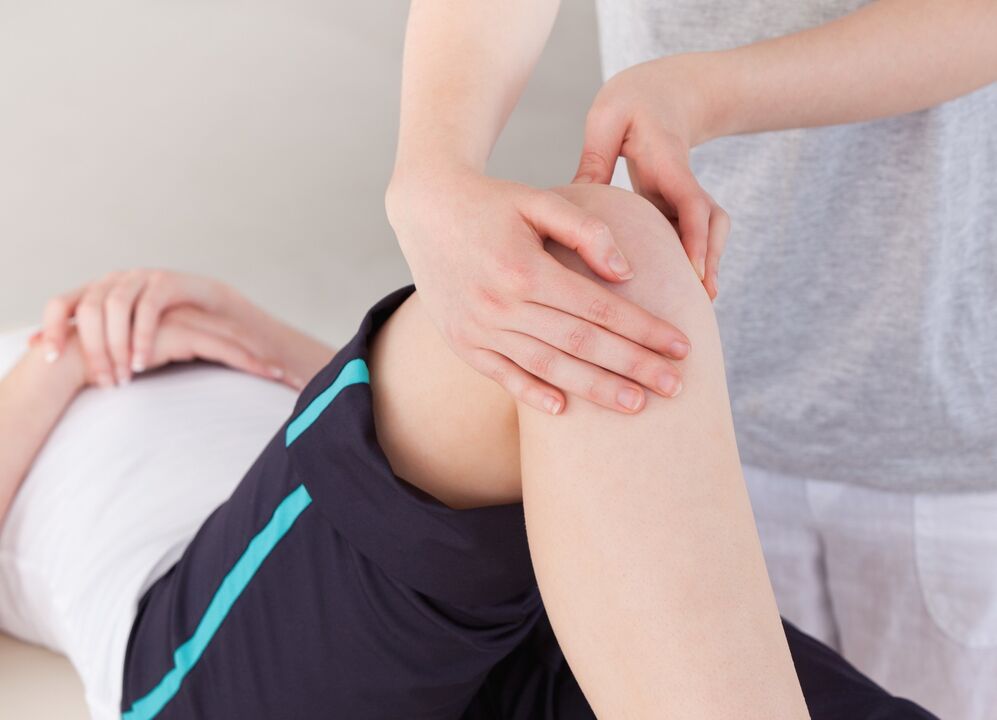
Following a diet and visiting a massage room are also considered essential methods to combat knee osteoarthritis.Scientists have proven that overweight people belong to the first risk group, because extra pounds put significant pressure on the knees, which leads to wear and deformation of the joints.
Nutrition for osteoarthritis should be balanced and regular.Maintaining a healthy lifestyle contributes to both prevention and rapid recovery.
As for massage, it should only be carried out by a specialist.These procedures will reduce pain and eliminate the symptoms of the disease.Massage also helps to improve tissue nutrition, strengthen and develop knee muscles, preventing deformation and subsequent atrophy.However, these methods are more relevant at the initial stage of the disease.As soon as the first symptoms appear, you should immediately contact a specialist for examination.
Remember!You can't self-diagnose!Because many diseases are accompanied by joint damage resembling osteoarthritis.It is therefore very easy to make a mistake when identifying a disease.